
Narrative media and representations of reality
Grim-visag’d war hath smoothed his wrinkled front
Richard III
As Richard III says, historical recollections of war reflect perspectives and histories that are dominated by the war’s outcome. Historiography teaches us that those perspectives are not the whole truth of the messy experience of war and conflict. I am going to talk about the ideas of duty and sacrifice in war, based on my findings from a literary comparison of the prescribed text, The Fiftieth Gate by Mark Baker and my related text, A Testament of Youth, a film directed by James Kent. While the focus is primarily on A Testament of Youth, by way of comparison I will also comment on how these ideas are comically realized in the political satire film Wag the Dog. Wag the Dog extemporises on the idea that the audience is always manipulated, whether by deception or ideology, to a certain point of view. In enjoying this as a comedy, the audience recognises that a historical perspective of politics and war is in the eye of the person telling the story, as:
‘Until lions have their historians, tales of the hunt shall always glorify the hunters.’
African Proverb
In the case of Testament of Youth we have two perspectives, that of Vera Brittain and the director Kent. A director visualises what they think to be the important elements of the story. In this case, there is heavy focus on the relationships with close-ups and emotion attached to all the tragedy experienced by Vera. This makes Vera’s personal life and experience political.
What meaning has the composer brought to the text?
By the end of this presentation, I will show that the class text The Fiftieth Gate represents World War II from the perspective of the author and the author’s parents, based on his context, which includes his role as a historical professor, and his experience as a son of Holocaust survivors. This gives both author and narrator perceived elevated status as a teacher (professor) and victim (Holocaust survivor). Because of this, the reader is more likely to accept the narrative as authoritative. In contrast, Testament of Youth provides audiences with a similar, yet slightly different understanding of duty and sacrifice by representing World War I from the perspective of a female nurse, Vera Brittain, the original author, and making it like a documentary of her life. The director of the film also manipulates perspective using various filmic methods to make the audience sympathize with this perspective, especially the use of close-ups, to make us accept Vera’s version of events.
The historical event described:
World War 1 was fought a turning point in history at the end of the Industrial Revolution and the fight for women’s rights with the Suffragette movement. Vera’s description of World War 1 also means that the audience is asked to think about how a woman would view these events differently. The film only details Vera’s experiences in war, which is a snapshot of a part of her life, but a very life-changing event in history, so she is justified in only talking about this period. It is based on an autobiography of the same name by Vera Brittain, it details her experiences as a war nurse and the men she cared about. It is both a historical record of her experiences and a literary work with a particular perspective. It was published in 1933 after Vera Brittain made a number of attempts to write her memoir of her experience. Finally, when she started writing in her own voice, the words came easily. She was a feminist and a pacifist but book sales dropped off in 1939 as people thought her pacifism was because she supported Hitler and she wasnt trusted. In fact Hitler had her on a list of people to arrest once they took over England. There was a film made of the book in 2014. The film shows how individual lives are affected by war. The Testament of Youth text is one of the first texts that thoroughly describes from an anecdotal point of view the horrors of conflict, and is describing a woman’s experience. It depicts Vera Brittain, a bright young woman, on the cusp of WWI, with a goal to go to to Oxford, and her brother Edward, and his friends, Roland and Victor. She even starts courting Roland.
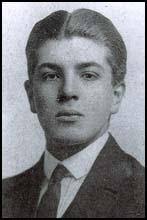
Everything changes, however, when the war hits home in Britain. Both Roland and Edward quite quickly joined the war effort, with Victor originally having been turned down due to his eyesight, but soon after, he was accepted too. Vera gets engaged to Roland during one of his scheduled ‘home leaves,’ and joins the volunteer army nurses while he is fighting. Half an hour before the wedding, Vera gets a call from Roland’s mother, who gives her the news that Roland is dead. Vera continues to work as a volunteer nurse during this time. Victor had been injured in the war and suffers severe brain trauma, but by chance ends up in the same hospital as Vera, and asks to see her. She stays with him and both build relationship talking about the war amongst other things. Vera proposes to him, and even though he has loved her for a long time, he declines, knowing Roland’s fate. The next morning Victor passes away. Vera, now with nothing left to lose, goes to France, to make sure that her brother is safe. On the day of the ‘big push,’ Vera finds her brother, lying injured amongst the dead. She hauls him out, and nurses him back to health, before he heads on towards Italy. A note from her father calls her home, saying that her mother is not well. She arrives, and begins organizing the house, hires a maid, and cleans up. The telegram comes to the house, and as Vera watches the delivery man from the window, he gives her father the news that Edward has been killed. With nothing left to lose, Vera rejoins the volunteer nurses. The film jumps from Edward’s death to Armistice Day, as Vera mops the floors of the hospital. The rest of the film flashes through her life after the war.
Relationship to common understanding - Parallel or alternative perspective?
This is an alternate perspective film. For a start, the film is shot 100 years later and politiics and public life has changed. The patriarchy is not as strong. The central concept of patriarchal patriotism is that going to fight on the front was the best way to support one’s country. Of course, during World War I that did not include women, and so women were given the helping roles, to become volunteer nurses, work the farms, work in factories, mend socks, amongst other things. Women also performed traditionally male roles that had lost workers who had gone to fight. Many volunteer nurses put up their hands for active service – 3000 in Australia, in fact. Many nurses chose to participate in the war to travel and explore as well as serve. The film indicates that one of Vera Brittain’s principal reason for volunteering was her desire was to be close to the men in her life. This is evident in her choice of active service and the way she placed herself in proximity to their fighting regions. It cannot all be attributed to synchronicity, and yet one reading of this is that the narrative, will claiming to present a brave woman in focus, gets subverted by the constant concept of the female as the helper or follower of the men.
The death toll for female nurses, even though by international law there should have been no lives lost in the medical and red-cross units, was still visible. 25 of those 3000 women passed away in active service. Vera Brittain is not a fictional character, and therefore, there is a lot of information regarding her whereabouts during the war. No. 24 GH in Etaples really existed, although it is now covered over by housing. The hero narrative being applied to a woman in war through duty and sacrifice is a new and different narrative angle for a war movie, yet in many ways her duty and sacrifice is presented as in service of the men in her life and not in service of patriotism, which is different to the standard male hero journey. It could be argued that this undermines the feminist narrative, or it could be argued that it actually shows the complexities facing a female protagonist hero in an unequal time in history.
What can it say about reality?
This quote from the film clearly shows how the director is asking us to think about representations of reality, and how perception and reality can be different:
Miss Lorimer: “You don’t own the truth about how we get through this, Miss Brittain. Your opinion is just that, an opinion, and you’d do well to remember it.”
Vera’s ideas about the war are perhaps criticised by Miss Lorimer, who doesn’t think they are the truth but just an opinion. A memoir is a first hand account of one person’s experience. One thing it says is that reality can be the experience of a woman who is a nurse, and not just the military commanders, or just a male soldier. This film can expand our experience and our thoughts about what happened in the war by presenting the story of Vera.
How can it be valued today?
Despite losing so many men in her life, this account of the war even today opens our eyes to the different experiences of war. The film also has a pacifist goal in it, with Vera making lots of statements about never wanting to experience anything so horrible ever again:
“They’ll want to forget you. They’ll want me to forget. But I can’t. I won’t. This is my promise to you now. All of you.”
Lest we forget is a common phrase reminding us that the horrors of war should not be repeated. Here Vera states her own version of that idea. If we are to learn from history today, we need to take the lessons of history. That the film was made so recently, 100 years after World War 1 started, shows that we are still interested in trying to avoid another world war, and that learning from the stories of survivors and victims can help with understanding. It is also true that alternative perspectives are valued today, and giving a female from this time period a voice to describe their experience and speak about war from the perspective of a non-combatant is new and unique. As opposed to 100 years ago, when the story of a nurse would not be considered central to the narrative of World War 1, now it has become important to hear different perspectives and stories not necessarily from the front lines.
Discussion 1: Duty
The narrative on duty is presented at first as Vera watches the men in her life lay down their lives, and then is turned on its’ head as her own sense of duty is portrayed through her journey to the field hospital to serve. The concept of duty is present and in abundance in Testament of Youth, specifically between Edward, Vera, and Edwards friends (Roland, Geoffrey, Victor).
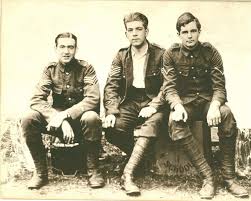
All of the young men are desperate to prove their worth, the significance of which is explained in Vera’s final speech. When Vera persuades her father to let Edward go to war, the use of high modality language and the imperative, “Let him be a man,” creates a urgent and persuasive tone that highlights the idea that fighting in war is a sign of true masculinity and patriotism. This is also evident when Roland speaks truthfully to Vera on the train to Oxford. “I can’t let others do my duty for me,” he tells her, as if war is the only way to prove oneself, once again using high modality language to accentuate his ideals about war and duty. An underlying sense of duty and patriotism is also displayed when Roland asks to be transferred to the Western Front. Amidst Roland and Vera’s discussions about this, the director uses medium panning shots to draw our eye to his army uniform, thus emphasizing his readiness to serve in the war and the importance of belonging to an ideal.
Vera, too, has ideas about her own duty. It is established quite early on in the film that Vera does not support the patriotic, male centred ideals that everyone she is surrounded by believe. The way this narrative is visually framed, with close ups on Vera as she expresses her views, shows that the director wants us to empathise with her view. Once Edward, Roland and the others go to war, Vera has reservations about whether she should be staying at Oxford rather than helping the war effort. Yet she knows that she “can’t just stay and do nothing,” contradicting her previous remarks on the subject and revealing her overriding sense of duty. She leaves school, something she had fought for for the longest time, and goes to join the volunteer nurses.
With these action based sequences, mid range shots make the audience accept that this is the appropriate cause of action for her.
After Roland passes away, there is an urgency pushing her to volunteer at the front – in France. We see this with increased cutaways from the director and more fast paced changes of camera angle, indicating movement and action, as if we are in the action with her. This makes the audience feel empathy and affinity with her decision. She reasoned with her parents that it’s because she, ‘needs to be there.’ The close up shot of her father’s face in this moment is not dissimilar to the look he gets just before Edward leaves – it is a look of painful understanding, that one needs to fulfil their duty when required during a war - as duty country rises above duty to family in these times.
Discussion 2: Sacrifice
In Testament of Youth, many of the characters sacrifice parts of themselves for the war, for their own gains, and for their friends. The young men are extremely willing to sacrifice every bit of themselves for the war, and the war effort, and eventually all die for their country. Vera, also, sacrifices so much for the war, yet being a woman that sacrifice occurs behind the front lines. Edward, Victor and Roland give up many luxuries to participate in the war, such as a clean bed and warmth, and each other. These are shown in shots of their life in Britain contrasted with the ugly mess of war. In a contrast to the standard narratives on war, documentary footage etc, the film focuses on the ugliness and complexity of the losses faced in war. Edward, Victor and Roland sacrifice their health. Even before any of them were sent to fight on the front, Roland became ill with the Spanish flu, causing him to not be in a good place to begin his active service, which may have played a small part in his death. From what we know of war now, we realise the uncomfortable and unclean situations the allied forces had to work in, and what Roland may have encountered the day he died. We also hear from George Catlin that the medical staff in Louvencourt were waiting on morphine stocks to dull the pain of the casualties. Catlin reveals that Roland had been ‘given a small dose, near the end.’ Victor, too, suffered at the hands of warfare and hospitalisation. He had a large hole in his head and severe brain damage from ‘shell shock’ and was not likely to survive for as long as the others. The ugliness of these physical challenges are indicated in the gruesome footage illustrating the minute details of their impending deaths.
Victor’s sacrifice is in some sense more tragic than Roland’s, in that the woman he had loved for the longest time proposed to him, and he declined, knowing she did it out of love for him as a brother and that she had already suffered enough. This doubling of the original tragedy, is illustrated by the director in perspective shifts between characters. Edward, now the only one left standing tells his sister not to worry; that he would sacrifice anything for her, should she ask it.
Vera, upon suffering the death of all three men, responds by sacrificing herself to the front, to assist as a volunteer nurse at GH 24 in Etaples. Vera sacrifices more than just her life here. She sacrifices her schooling at Oxford, and something she is sure is going to be taken out from under her. She goes to speak to the principal of Somerville College, and asks her about deferring her studies at Oxford, to be a VAD nurse. Their conversation is situated in a low angle shot, with both Vera and the principal in the shot together. Vera is standing and the principal is sitting. Unusually, the principal still has the power in this shot, because she continuously does other things whilst talking to Vera. She turns, and says, “you don’t know the truth about how we get through this. Your opinion is just that – an opinion.”
This undermining statement demonstrates the ‘Representations of Reality’ topic of this unit, in that everyone thinks that they know the truth about whatever situation they are in, but in fact, it is only on the collection of all these opinions that we see the broader picture. Brittain wants us to see her inexperience and naivety dissolve gradually, as she learns of the horrors of warfare, so that the feminist narrative implicit in the story of a woman in war is undermined by the complexity of the idea that her eyes are gradually opened by men to the horrors of war. Thus, despite her bravery, sense of duty and sacrifice, her learning comes through the experience of men before her. The repeated use of camera angles like this reinforce this dichotomy.
Comparison with The Fiftieth Gate
The Fiftieth Gate by Mark Baker is a semi-biographical novel about Baker’s parents, who were Holocaust survivors. The novel centres around their journey to survive in Europe during World War II. This text exhibits a widely held view about the Holocaust that our Western society has accumulated through personal anecdotes such as this. However, there are some parts of the narrative that are not usually seen, such as the loss of memory. A similarity between Testament of Youth and The Fiftieth Gate is the way the narrative is manipulated to show that in some cases, a personal anecdote is more important to the whole truth than one dominant view according to established history. ‘Sacred’ individual memories are what actually create “truth” in history. There is also a slight similarity between Baker’s parents and Roland Leighton, in that they chose to not tell the traumatic stories at all, or if they do, they omit the gory details, as if they themselves never saw the worst things happen. If a person goes through a traumatic experience at a young age, the more frightening it is to go back and unearth it. It also tells the audience that we can never uncover the whole story, only the aspects of experience that the writer or director wants us to see. This idea that truth is partially held or revealed is central to both these texts.
This is the case with Roland, Catlin, and Baker’s parents – all of these people experienced trauma at a young age, and don’t reveal all the details about it. In contrast to A Testament of Youth, The Fiftieth Gate focuses on the lapses between the parent’s memories, and Baker attempts to fill in the blanks with history. He says, “Lament propels me forward in a desperate bid for illumination,” talking about his internal struggle of memory versus history, using informal language to make his point clear to the audience. Baker continues to contrast his points, by saying things like “Jews were finished” and contrasting the detached, history textbook way of writing from his personal and informal language scattered throughout the novel. Baker believes that “Freedom is not a happy ending. It is a flame that dances in remembrance inside the blackness.” The blackness in this poetic line is a metaphor for the suppression of memory, and that freedom is memory, and will be there for time immemorial, and it is the duty of the Baker family to bear that.
This authenticity of individual experience, whether half revealed or not, is central to both texts. The audience is given a partial reveal to show that the traditional historical perspective and individual experience are both imperfect versions of events. Both Brittain and Kent are interested in convincing their audience that life is messy and never fully revealed, particularly in the fog of war, when fallible humans are telling the story.
Discussion 3: The ultimate perspective shift on war: Wag the Dog
Wag the Dog is a film directed by Barry Levinson, and is a political satire. It is the ultimate comment on forced perspective as it steps the audience back away from the actual fog of war to the way human manipulate the message of war to their own perspectival advantage. The film is a comedy with few out-right laughs as the audience realizes how much of human experience is manipulated through the filter of the auteur - in this case a political operative attempting to deceive the general public on behalf of the president.
The film focuses on sacrifice in the name of duty to country to manipulate the emotions of the populace. For example, Conrad Brean sacrifices so much to work with the President and his people, such as his reputation, his friendships, his credibility with the CIA and much more. Once Conrad asks his director-friend Stanley Moss to work with him on a scam made to fool an entire country, he knows what will happen if anyone speaks, or threatens to. In the third-last scene of the film, they talk about how he wants ‘the credit, the credit, the credit,’ and Conrad is forced to kill his friend so that he doesn’t speak about what they did, which is quite ironic. Both Stanley and Conrad talk about war being ‘show business,’ and that that is the reason they are both working on this project, and demonstrate how a marketing campaign might present the war, as well as the President. Both Conrad and the general public share the same rights as each other – to protect ‘their way of life,’ and for all of them, that means protecting the President, Conrad being active about it, and protecting the President’s reputation, and the general public to support and endorse the President’s decisions.
Linking conclusion
All of these texts share a common theme of war, and each have a unique narrative style, genre and take on that war. The texts all represent the “reality” of war, but give incomplete or diverse narratives that are all part of a journey through the largest wars the West has seen. All of these texts question the dominant narrative of historical record, although they gain legitimacy by using elements of that traditional history and documentary, first person records and recollections, before diverting from them or placing them next to other versions of events. In the case of A Testament of Youth a heroic female follows her men into war (as a nurse) and shows the emotion of loss and love from a woman’s perspective, all the time speaking in first person about the men she is attached to. In the case of The Fiftieth Gate authority is obtained by making the audience empathise with the victims (Holocaust survivors) and giving this factual credibility by engaging a professor narrator, which, in our culture, commands authority. In Wag the Dog the satire forces the audience to “know” that the narrative is manipulated, in this case through a knowing and deceptive narrator. All of these texts are evidence that our perspective on war can change, and our view of women can also change, but it needs a narrator or the director. This shows that reality is always represented by a given voice in any story, even when based on historical events. Whether that voice is accepted by the audience as authoritative, authentic and truthful depends on the manner in which the story is written or told. This study shows that in fiction and film, narratives of war can change just like audience perspectives changed in the film Testament of Youth.